Claude Opus 5.5 in Claude Code: vs Sonnet 5.5 and Fable 5.2, how to switch, what it costs
Opus 5.5 is now Claude Code's default model. When to pick Sonnet 5.5 or Fable 5.2 instead, the commands to switch, effort levels, and what each costs.
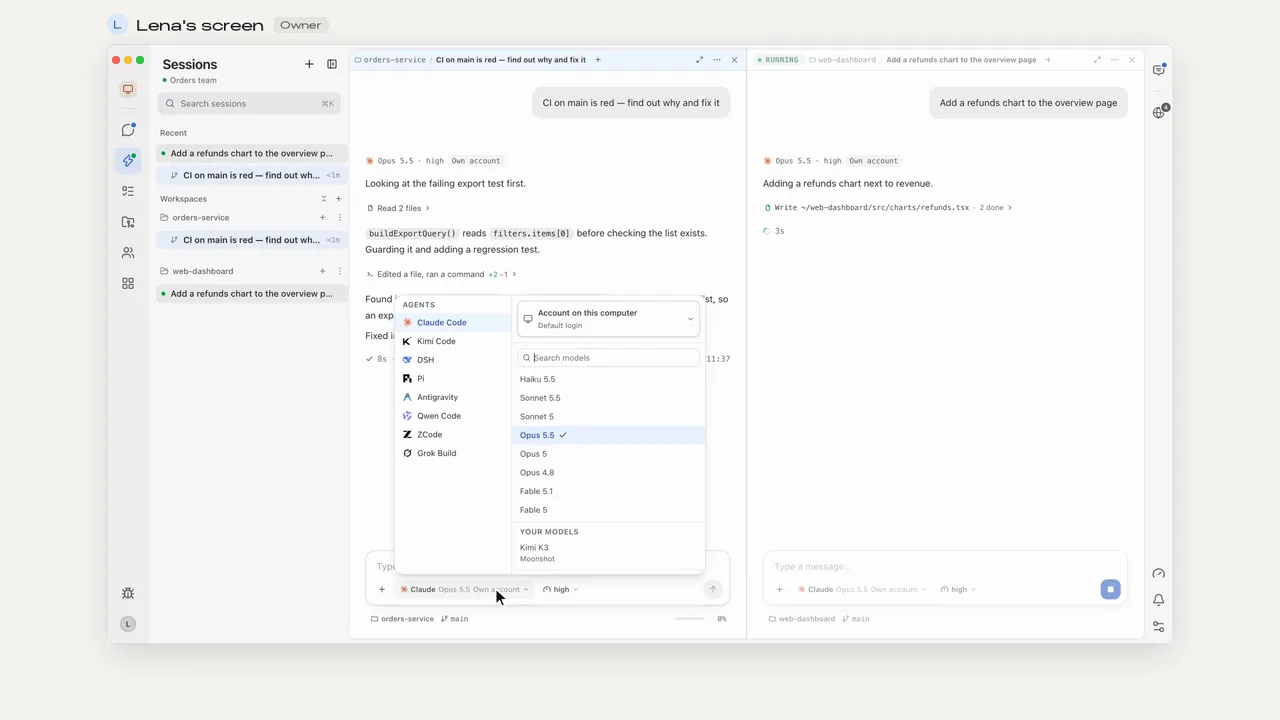
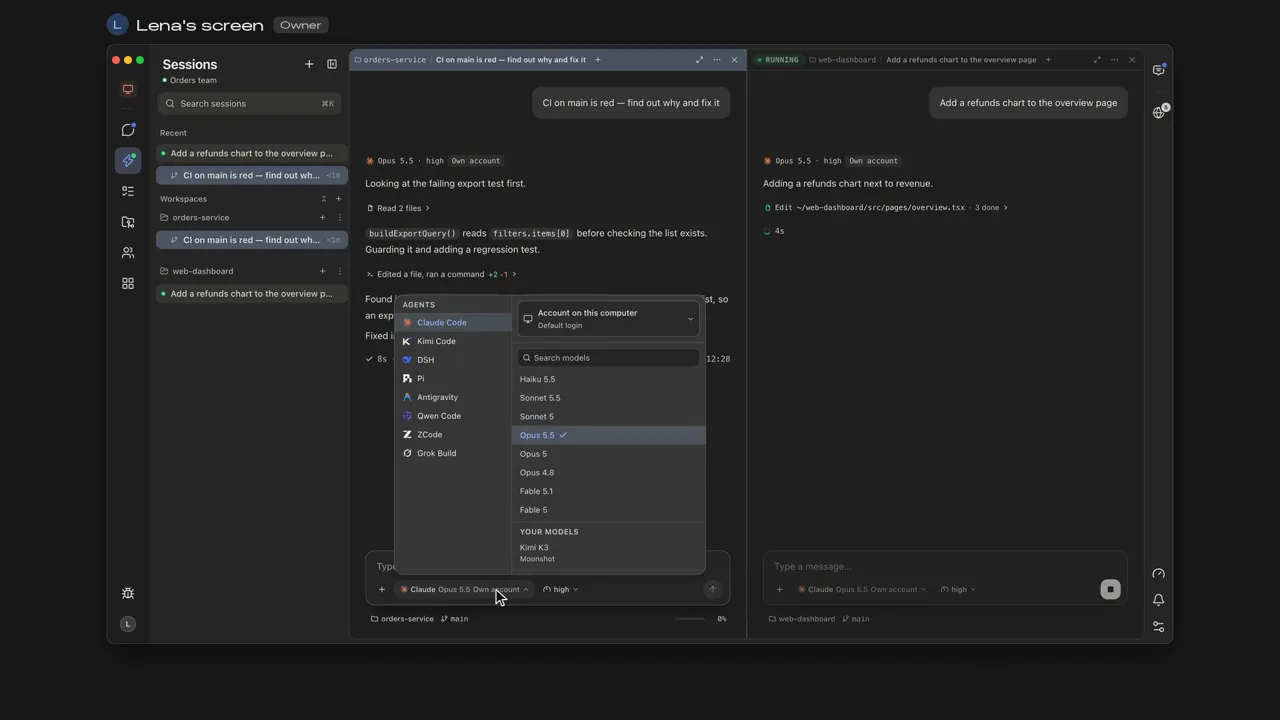
The short answer
Claude Opus 5.5 is the model Claude Code starts on for Pro, Max, Ultra, Team and Enterprise plans and on the Anthropic API. Anthropic's own advice is to start with Opus 5.5 for most work, and to use Fable 5.2 for the hardest reasoning and long-running tasks. Sonnet 5.5 is the cheaper choice for everyday coding. All three have a 1M-token context window and up to 128K tokens of output.
| Opus 5.5 | Sonnet 5.5 | Fable 5.2 | |
|---|---|---|---|
| In Claude Code | The default; /model opus | /model sonnet | Never the default; /model fable |
| Best for | Most coding and agent work | Everyday coding with a clear scope | Hard problems and long autonomous runs |
| Default effort | medium | medium | medium |
| API price, input / output per 1M tokens | $4 / $20 | $2 / $10 | $8 / $40 |
| Needs Claude Code | v2.1.280+ | v2.1.284+ | v2.1.321+ |
On a Claude subscription you don't pay these per-token prices: Claude Code draws on your plan's usage instead. Depending on your plan and seat, Fable can bill to usage credits; the /model picker then marks its row “Requires usage credits”.
How to switch models in Claude Code
/model                  # open the picker inside a session
/model sonnet           # switch to Sonnet 5.5 and save it as your default
claude --model fable    # start a session on Fable 5.2
claude --model claude-opus-5-5 # pin the exact model instead of an alias- In the picker, Enter switches and saves the model as your default;
sswitches for this session only. - Other ways, from highest priority down:
--modelat startup, theANTHROPIC_MODELenvironment variable, themodelfield in settings, andANTHROPIC_DEFAULT_MODELfor new sessions. - Aliases such as
opusandsonnetfollow the newest version. On Amazon Bedrock and Google Cloud's Agent Platform,sonnetstill means Sonnet 4.5, and on Microsoft Foundryopusmeans Opus 4.6; use the full model name there. - An older Claude Code that doesn't know the model fails on the first request. Run
claude updatefirst.
Article · How to update Claude Code, pin a version, or uninstall it → Updating Claude Code, whichever way you installed it.
Which one to pick
- Opus 5.5
- You're not sure, or it's ordinary feature work
- Sonnet 5.5
- A well-scoped change you want done quickly and cheaply
- Fable 5.2
- A root-cause hunt, an architecture call, or work you'd normally split up
opusplan- Plan with the strong model, write the code with the cheaper one
opusplan uses Opus in plan mode and switches to Sonnet to carry out the plan. Haiku 5.5 is there for quick, simple tasks.
Anthropic's tips for Fable: describe the result you want rather than the steps, hand it ambiguous problems, and skip the reminders to test, because it checks its own work more than smaller models do.
Effort: how hard the model thinks
low- Quick exchanges you check each time: a first sketch, a rename
medium- The default on Opus 5.5, Sonnet 5.5, Fable 5.2 and Haiku 5.5; fits day-to-day work with a clear scope
high,xhigh- Harder problems, at a higher token cost
max- The deepest level; set with
/effort, it applies to the current session only
Change it with /effort, or from the /model picker. Claude Code saves the level per model, so Opus and Fable can keep different defaults.
Running Opus 5.5 in Mirasim
Mirasim runs the Claude Code CLI itself, so /model and /effort work as above. What changes is who pays: each session has a “Paying with” setting.
| Paying with | What runs | What it costs |
|---|---|---|
| Agent/Model account | Your own Claude sign-in or API key | Your plan's usage, or your API bill |
| Personal credit or space credit | Claude models provided by Mirasim | Off the official API price: Opus 5.5 50% off, Sonnet 5.5 50% off, Fable 5.2 30% off |
1 credit is $1 at the official API price; every model's price and discount is on mirasim.ai/models. A personal Claude subscription is for its owner only, so a session your team steers together runs on space credit or a shared key. Mirasim is not an Anthropic product.
Questions
- Is Opus 5.5 the default in Claude Code?
- Yes, on Pro, Max, Ultra, Team, Enterprise and the Anthropic API, and on Bedrock and Google Cloud too. Microsoft Foundry defaults to Sonnet 4.5. An admin can set a different organization default.
- Why don't I see Opus 5.5 or Fable 5.2 in
/model? - Usually an old Claude Code (Fable 5.2 needs v2.1.321 or later), a provider whose alias points to an older model, or an admin's model restrictions. Run
claude update, or select the full model name. - How big is the context window?
- 1M tokens for Opus 5.5, Sonnet 5.5, Fable 5.2 and Haiku 5.5, with up to 128K tokens out.
- Does Fable 5.2 cost extra on my plan?
- It depends on your plan and seat. When it bills to usage credits, the
/modelpicker marks the row, and in an interactive session Claude Code can ask before continuing on Fable.
Article · Claude Code usage limits: what the messages mean, and how to keep working → What Claude Code's usage limit messages mean.
Article · Claude Team plan vs Enterprise: what a development team gets → Claude Team or Enterprise: how a team pays for these models.
Sources
Checked on November 26, 2026 against Anthropic's documentation: code.claude.com/docs/en/model-config, and platform.claude.com/docs/en/about-claude/models/overview and /pricing. Prices come from the same table as mirasim.ai/models. Check those pages for the latest.
Keep reading
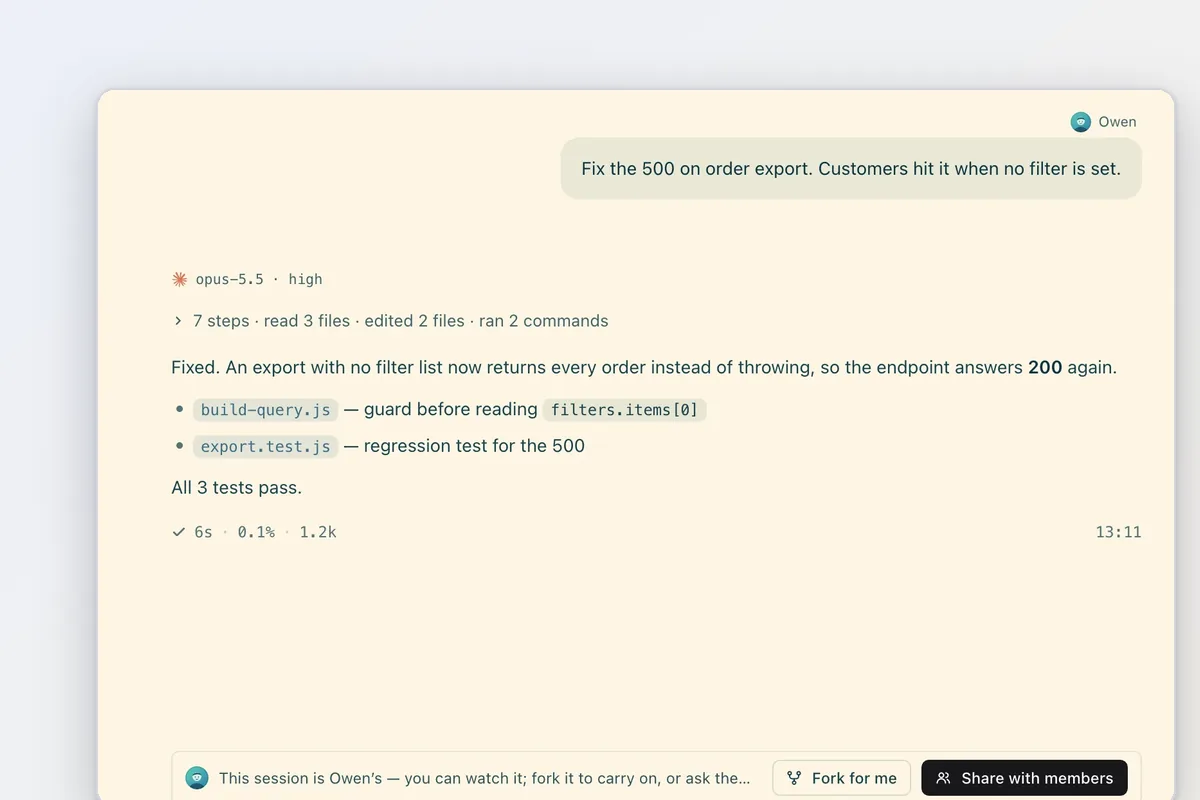
Claude Code for teams: access, shared setup, and working in one session
How a team uses Claude Code: a seat for everyone, the setup in the repo, sessions shared by link. And what to do when several people must steer one session.
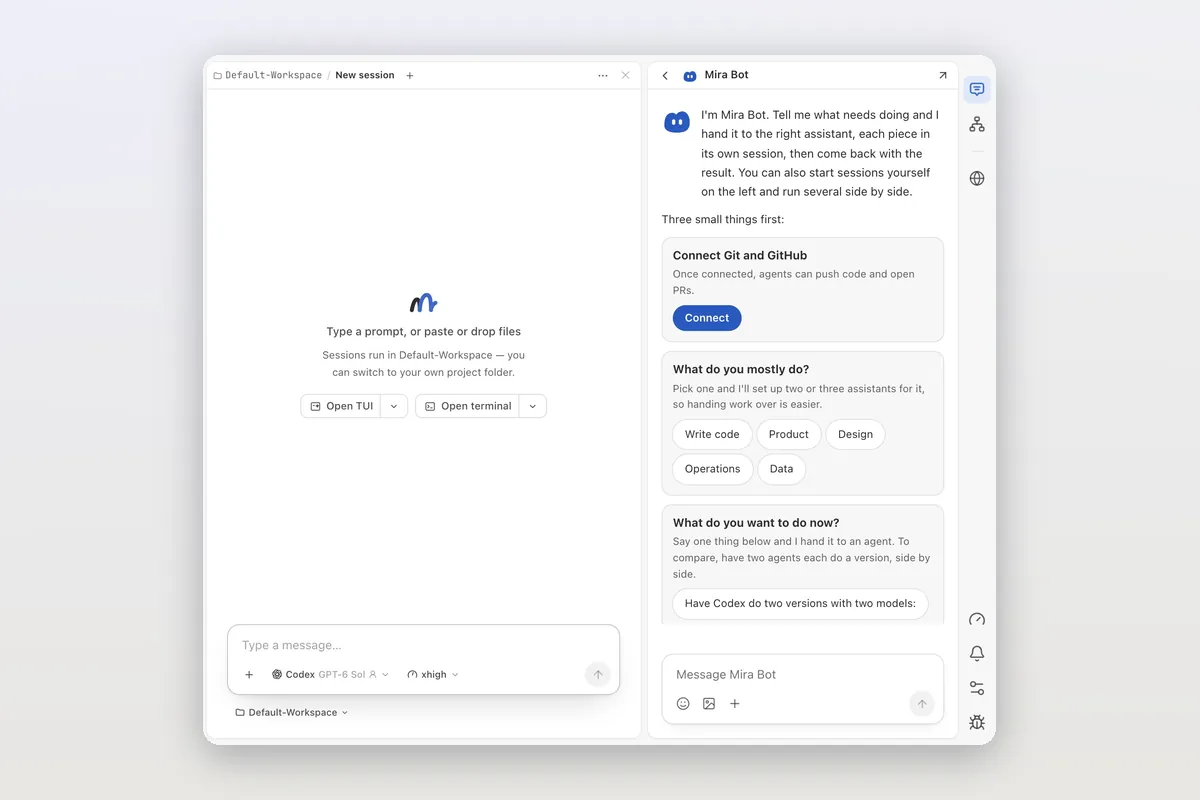
Codex on Linux: the desktop app, the CLI, and servers without a screen
Codex on Linux comes as a desktop app (preview: Ubuntu, Debian, Fedora, Arch) and a CLI. Install commands, updates, the sandbox, and signing in on a server.
How to install and update Codex CLI on macOS, Windows and Linux
OpenAI's install and update commands for Codex CLI: script, npm and Homebrew. How to sign in, check the version, and set it up on Windows, WSL and Linux.